

Leadership Lessons from Finland’s PM at UNGA—A Neuroinclusive Perspective

Updated: Jan 21
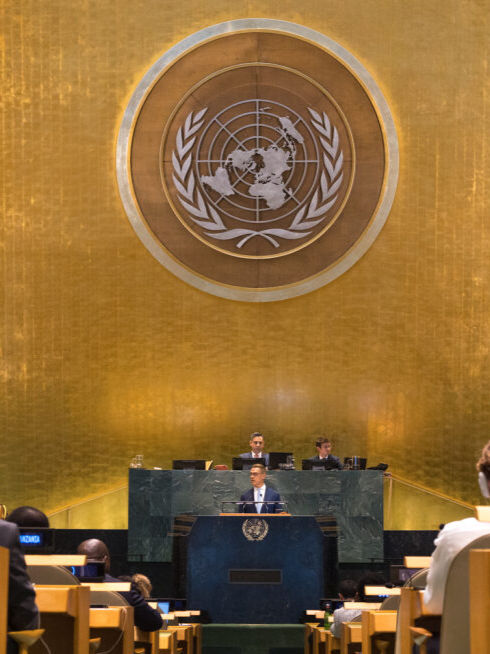
At this year’s United Nations General Assembly, Finland’s Prime Minister Alexander Stubb declared:
“Foreign policy is about values, interests, and power.”
He was talking about global politics, but his words ring true for workplace leadership—especially when building neuroinclusive cultures.
Values Anchor Inclusion
If values aren’t clear, inclusion becomes optional.
Leaders must state openly: “We design workplaces where every brain belongs.”
Neuroinclusive leadership starts with values—dignity, fairness, and psychological safety come first, not just compliance.
Align Interests with Values
Organisations chase productivity, retention, and profitability. But when interests ignore inclusion, the result is burnout, turnover, and reputational risk.
Leaders need to ask: “How do our interests support—not undermine—our values?”
Flexible job design, for example, boosts both performance and equity.
Power Is Influence, Not Control
Just as small states build alliances and trust, leaders shape culture through everyday influence.
You don’t need the biggest budget or title to model inclusive meetings or redesign recruitment.
Influence matters more than hierarchy.
Speak Uncomfortable Truths
Neuroinclusive leaders name what others avoid: bias in promotion, silence in meetings, or systems built for only one kind of brain.
Create conditions where employees can say, “This doesn’t work for me,” without fear.
Agency Belongs to All
True inclusion is shared power.
Don’t just “accommodate” differences—design proactively for them.
Universal design (“kerb ramps for the brain”) means everyone can contribute, innovate, and thrive.
Why Stubb’s Leadership Resonates
Clarity of Compass: Values are non-negotiable.
Balance: Interests matter, but only when anchored in values.
Redefining Power: Influence and trust over dominance.
Moral Courage: Willingness to name uncomfortable truths.
Too often, leaders swing between “all ideals” or “all interests.” Stubb demonstrates you can—and should—do both.
The Dangers of Power Without Inclusion
Power can distort reality, making leaders blind to marginalised voices.
It protects systems, not people, unless checked.
Without values, it fosters toxic, silencing cultures—especially for neurodivergent employees.
Practical Steps for HR and APAC Leaders
Anchor in Values: Make inclusion non-negotiable. Redesign meetings for all brains—chat, visuals, async input.
Redefine Interests: Link inclusion to goals like retention and innovation. Show the data: turnover costs vs adjustments.
De-weaponise Power: Shift from titles to trust. Train managers to earn influence.
Build Shared Agency: Enable all voices—especially neurodivergent ones—to propose solutions. Move from “accommodation requests” to universal design.
Name the Uncomfortable: Don’t avoid conflict. Respectfully call out where policies or practices fail.
💡 Takeaway:
Inclusion isn’t a “nice to have”—it’s a strategic leadership choice. Values are your compass, interests set the direction, and power is about trust, influence, and shared agency.
This is how leaders build workplaces where every brain belongs—and where organisations thrive in complexity.
Watch Alexander Stubb’s full speech here.


Comments